
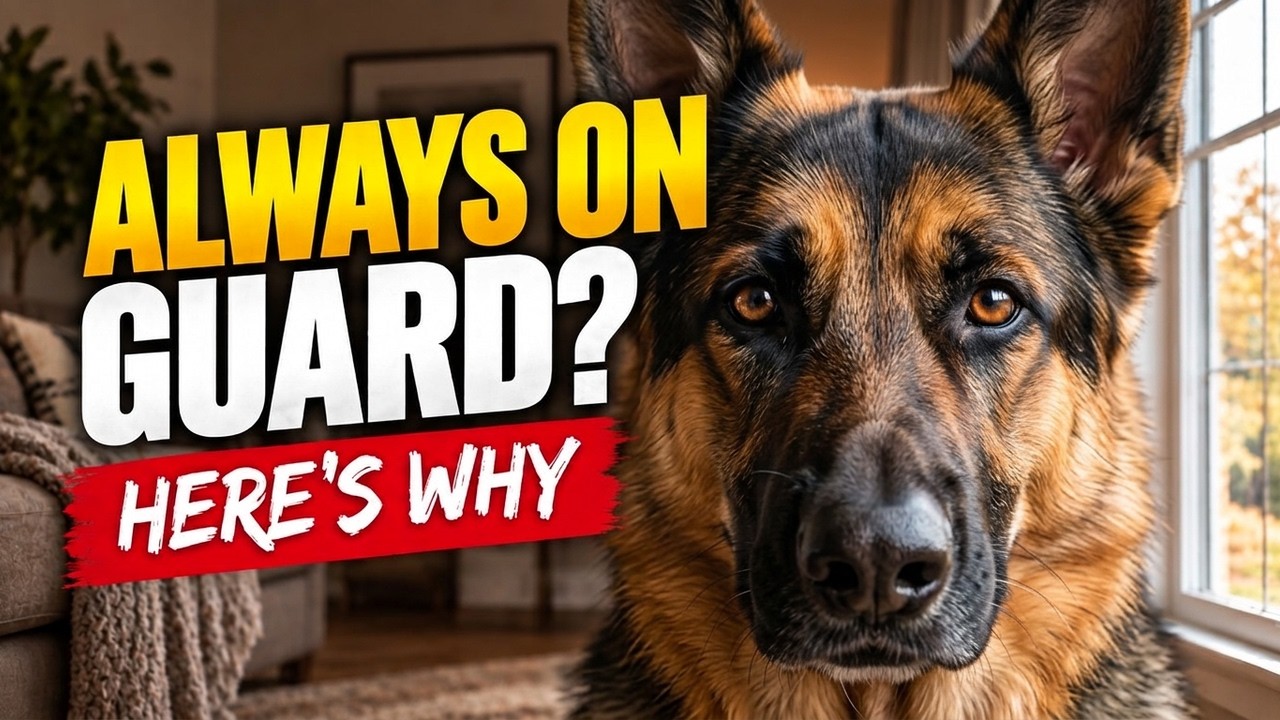
The German Shepherd is probably the most recognizable dog on earth. Intelligent, loyal, always ready. Movies and police work have built an image of a dog who understands people almost without words, so plenty of buyers assume the rest comes standard: a dog that listens, learns fast and knows what's expected.
Then real life starts. The dog is constantly on alert. It's tense on walks. It reacts to things you hadn't even noticed. And you wonder how a dog famous for its intelligence can be this hard to live with.
Let's not blame the owner and let's not knock the breed. Let's just look at how it actually works.
The image versus the animal
For many people the German Shepherd is the shorthand for "perfect dog": smart, protective, devoted. Because that image is so strong, a lot of owners expect discipline to come naturally to the breed.
But intelligence doesn't automatically bring calm. It can bring the opposite.
A dog designed to scan
German Shepherds were created for work: to watch, to react, to decide. Generation after generation of selection produced a dog that is permanently checking its environment. For that dog the world isn't neutral. It's a stream of signals, and each one needs to be noticed and interpreted.
That's a gift in a professional role. In a modern city it can be exhausting. Traffic, strangers, other dogs, a sudden movement at the edge of the street. To a German Shepherd these aren't scenery. They're events that deserve attention, and the mind stays switched on even when the body is lying down.
Fast learners learn tension fast too
A very intelligent dog picks up good habits quickly. It also picks up tension quickly.
If daily life has no structure or clear guidance, the dog starts organizing situations on its own. That isn't about dominance, which is the explanation people reach for most often. It's closer to responsibility. The dog feels it has to carry the job of deciding, because nobody else seems to be doing it.
Why so many end up in the wrong home
People tend to choose this breed for how it looks and what it stands for: strength, confidence, authority. But what the dog actually needs is less glamorous. Yes, exercise. Mostly, though, it needs predictability, consistency and a human who makes clear decisions.
Without that system the dog fills the vacuum itself.
What helps
- A routine you actually keep. Predictable days shrink the amount of the world the dog feels it has to manage.
- Calm, clear leadership. Make the decisions in the moments that trigger tension, so the dog doesn't have to.
- Structure on walks. Clear expectations make traffic and strangers a bit less of a big deal.
- Your own emotional steadiness. Tension on your end travels down the leash.
- An honest look at fit before you choose the breed, based on temperament and lifestyle rather than looks.
Who it's right for
German Shepherds do well with people who understand their working nature and can offer routine, calm leadership and emotional stability. In that kind of home the dog can look remarkably balanced. Not because its character changed. Because its character finally has a direction.
Most of the trouble with the breed doesn't come from the breed. It comes from mismatch: a working mind dropped into an unstructured world will try to build some order, sometimes in ways people don't expect.
The German Shepherd's biggest strength is its readiness to act. Give that readiness direction and the dog becomes stable. Don't, and tension moves in.
Watch the full video above, and if you live with a German Shepherd, tell us in the comments what feels hardest day to day. Thinking about getting one? Share what you expect from the dog. It's a useful exercise either way.