
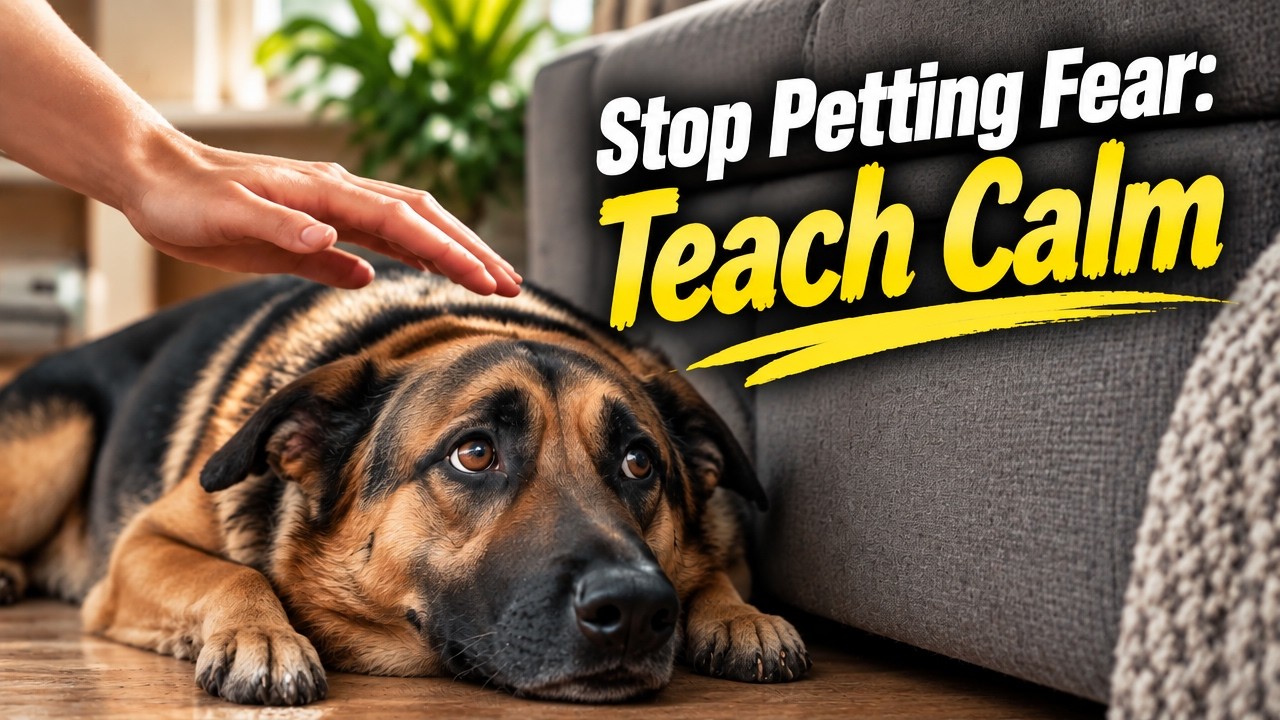
Today's dogs have more than any generation before them. Better food. A pile of toys. More attention. And still, problems are getting more common: overstimulation, trouble settling, hard walks, separation issues.
Which leaves a question hanging: are we giving dogs what they truly need, or just what looks good from the outside?
This isn't about trends. It's about what shapes how a dog actually functions, and what's just noise.
Too much stimulation
Many owners believe a dog needs constant activity: more play, more new experiences. In practice that often becomes a steady activation of the nervous system. New places, new dogs, new situations, again and again.
The thing is, dogs don't need constant stimulation. They need balance. Without moments of calm, even the best activity starts working against them.
Toys as a stand-in
Toys get treated as the answer to a lot. Bored? Toy. Overstimulated? Toy. Left alone? Toy. It looks like care.
But very often it replaces a real need with another stimulus. A toy can't stand in for structure, security or clear rules. It can distract the dog. It won't address the cause.
Too much control
Another common move is to increase control: more commands, more corrections, a reaction to every movement. From outside, it looks like training. But often it creates overload. The dog stops being able to tell which signals actually matter, and lack of clarity brings tension.
What's usually missing
The missing pieces are quiet, less visible ones. It's not about what we add. It's about what isn't there:
- a consistent daily rhythm,
- repeatable patterns,
- predictability.
For a dog, predictability isn't boring. It's the foundation of safety.
Relationship without direction
"The dog is part of the family." True. But closeness alone doesn't tell the dog how to function in the world. Dogs need a relationship with direction: clear signals, stable boundaries, actions that have consequences. Without that, the relationship becomes chaotic.
What dogs really need
Not perfect conditions. Consistent ones.
- A stable daily rhythm.
- Chances to explore.
- Moments of calm.
- An environment that's predictable without being restrictive.
- An owner who doesn't react to everything, but gives clear signals when it matters.
These are simple things, and they take understanding. In many cases the problem isn't a lack of effort. It's the opposite: a lot of actions that don't match what the dog really needs. The more we add, the further we drift from the basics, and the basics are what stabilize behavior.
Try this
Take a day and write down what in your dog's day is consistent and what is random. Where does the dog get to settle? Where is it just moving from one stimulus to the next?
If the picture looks very busy and very unpredictable, small changes can make a difference. And if your dog's anxiety is intense or new, involve your vet and a qualified behavior professional.
Dogs don't need more. They need better: less random stimulation, more structure, less chaos, more predictability. It isn't the quantity that makes the difference. It's alignment.
Watch the video above, and tell us in the comments what surprised you most when you looked at your dog's routine.